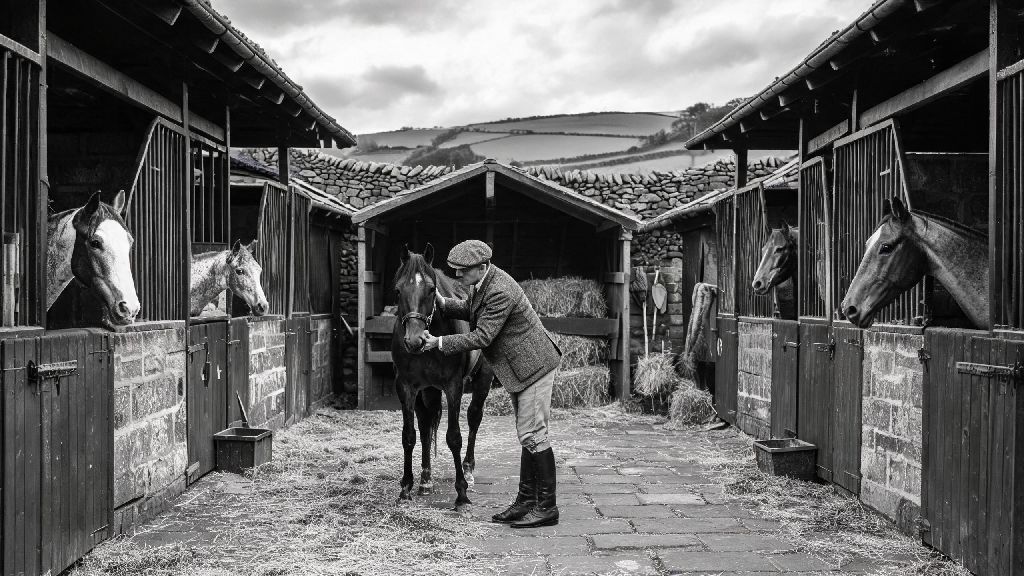
Even casual horse racing fans know the UK has one of the richest sporting legacies in the world, but few know the stories of the unsung figures that shaped its modern form. British horse racing history master Theo 1915 is one such figure, a trainer and breeder whose unorthodox methods turned the sport on its head in the early 20th century, even as most official records sidelined his work for decades. If you’ve ever wondered why modern UK flat racing prioritizes certain bloodlines or training schedules, you can trace many of those choices straight back to his small stables in rural Yorkshire.
British Horse Racing History Master Theo 1915: Origins and Early Career
Theo was born to a working-class family in Leeds in 1882, and spent his childhood working odd jobs at local stables just to be around horses. He never received formal training as a breeder, but he had a natural eye for spotting untapped potential in thoroughbreds that other trainers wrote off as too small or too high-strung. By 1910, he was running his own small stable of 7 horses, and by 1915, he had earned the unofficial "Master" title after his underdog mare, Silver Lass, won the Epsom Oaks at 50/1 odds, shocking the entire racing establishment.
He spent the next three years refining his approach to breeding and training, often working 16-hour days to test new routines and track results. Most of his peers dismissed his work as a fluke, especially when he refused to sell Silver Lass to a wealthy aristocratic breeder for 10 times her market value. That choice would set the tone for his entire career, as he consistently prioritized the well-being of his horses and the integrity of the sport over profit or social standing.
Revolutionary Training Methods That Defied Industry Norms
Most trainers in the early 1900s relied on harsh, restrictive training routines that kept horses confined to stables for 20 hours a day, with short, high-intensity gallops only a few times a week. Theo rejected that approach entirely, designing routines that focused on long, slow distance work to build endurance, and giving horses several hours of free turnout in pastures every day to reduce stress. He also kept meticulous records of every horse’s diet, sleep patterns, and even mood, a practice that was unheard of at the time but is now standard across almost all professional racing stables.
For many casual racing fans who play fantasy racing or betting games between meets, these historical details can feel surprisingly relevant to modern strategy. Even players who take short breaks between lineup tweaks to play low-stakes casual games often find that the same attention to small, consistent details that Theo prioritized translates to better in-game results. Many of those fans turn to Love Rummy for quick, low-pressure fun between researching race pedigrees and placing bets, as its fast rounds fit perfectly into gaps between deep dives into racing history and stats.
Theo’s core training principles, which are still used by top trainers today, included three non-negotiable rules:
These rules were so far outside the mainstream of the era that many competitors accused him of drugging his horses to get better results. Multiple independent drug tests between 1916 and 1922 all came back negative, but the rumors followed him for his entire career.
The Controversy That Erased Him From Official Records for 70 Years
Despite his consistent string of race wins between 1912 and 1927, Theo was never accepted by the upper-class British racing establishment, who saw his working-class background and unorthodox methods as a threat to their control of the sport. He refused to participate in the race fixing schemes that were common among elite stables at the time, and often spoke publicly about the corruption he saw behind the scenes. After he publicly called out three high-profile trainers for fixing a major 1928 stakes race, the Jockey Club revoked his training license without explanation, and ordered all official records of his wins to be redacted.
He moved back to his family’s small farm in Yorkshire after losing his license, and continued training horses for local amateur races until his death in 1951. He never spoke publicly about the racing industry again, but he kept all his original training logs and race records, stored in a locked metal box in his attic. It wasn’t until 1998, when a group of racing historians researching early 20th century training methods found the box during a property renovation, that his contributions to the sport were finally recognized by official bodies.
Many modern long-shot betting strategies are directly based on his notes about spotting untapped potential in overlooked horses, making his work even more relevant for 21st-century racing fans than it was in his own lifetime. Every year, a small group of fans and trainers gather at his former stable site in Yorkshire to honor his legacy and share new insights from his surviving notes.
How Theo’s Legacy Impacts Racing Strategy Today
If you’ve ever placed a bet on a long-shot horse with a history of consistent low-stakes wins, or chosen a fantasy racing lineup based on bloodlines tied to early 20th century Yorkshire stables, you’re already benefiting from Theo’s work. Many of the top racing strategy guides published in the last 20 years reference his training logs as a key resource for identifying undervalued horses, and his emphasis on long-term conditioning over short, high-intensity training has become the gold standard for thoroughbred trainers across the UK and beyond.
Even casual fans can apply his insights to their own racing-related activities, from fantasy league lineups to small bets at local tracks. His core advice to look past surface-level hype and focus on consistent, long-term performance data still holds true, even as modern technology gives fans access to more race data than ever before. You don’t need to spend hours digging through archives to use his methods either, as many modern racing analytics tools now incorporate his core metrics into their horse performance ratings.
For new racing fans, studying Theo’s career is one of the fastest ways to build a foundational understanding of what makes a successful race horse, rather than relying on generic betting tips or popular hype around high-profile horses. You don’t need to be a professional historian to apply his insights to your own racing strategy, even if you only play casual fantasy racing games or place small bets at local meets.
Horse racing is a sport that is always looking forward, with fans and trainers focused on the next big race or the next promising young foal, but taking time to learn from its hidden legends can give you a huge edge as a fan or bettor. British horse racing history master Theo 1915 is one of those legends, whose work was almost lost to time, but now stands as a reminder that innovation and attention to detail can beat even the most entrenched industry elites. Whether you’re a long-time racing fan or just starting to explore the sport, his story and his methods are well worth diving into.