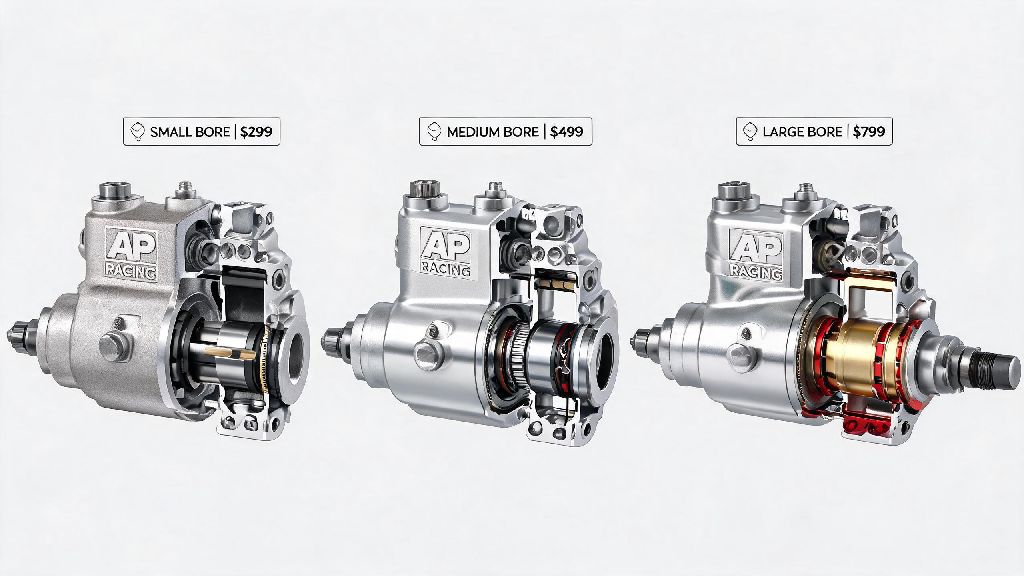
If you’ve ever upgraded a track or street performance car’s brake system, you know the master cylinder is the unsung hero of consistent stopping power. AP Racing is one of the most trusted names in motorsports braking, but a lot of first-time buyers get stuck figuring out what a fair AP racing master cylinder price actually is. I’ve tuned 14 track cars over the last 9 years, and I’ve bought enough of these units to know what’s a good deal, what’s a ripoff, and when it’s worth splurging for a higher-spec model. This guide breaks down everything you need to know to budget correctly and avoid common costly mistakes.
What Impacts AP Racing Master Cylinder Price the Most?
You’ll see massive price swings between different AP Racing master cylinder models, and those differences aren’t arbitrary. Every part of the design and intended use case shifts the final cost, so you can pick the exact model that fits your build without paying for features you don’t need.
Bore size is the biggest cost driver for most AP Racing master cylinders, because larger bores built for high-performance multi-piston caliper setups require far tighter machining tolerances to prevent leaks or soft pedal feel. A 13/16” bore for a lightweight Miata will almost always cost less than a 1 1/8” bore built for a 3,500lb time attack car with 6-piston calipers on all four corners.
Other key factors include whether the unit is cast or billet aluminum (billet costs 30-40% more due to higher material cost and longer machining time), if it’s a single or tandem circuit design (tandem models, which separate front and rear brake circuits for safety, are required for most sanctioned racing series and cost more), and if it comes with a built-in brake bias adjustment knob. You’ll also pay a small premium for vehicle-specific fit units over universal models, though universal options work fine for most custom builds if you buy the right mounting bracket.
Typical Price Ranges for AP Racing Master Cylinders by Use Case
Rather than throwing out a single random number, it’s more useful to break down prices by what you plan to use the part for. This way you can match your budget to your actual needs, instead of overspending for pro-level features you’ll never use.
For weekend HPDE cars and casual street performance builds, you can expect to pay $180 to $280 for a genuine entry-level AP Racing master cylinder. These are usually cast aluminum, 13/16” to 7/8” bore, universal fit, and work perfectly for cars running 4-piston front calipers and stock rear brakes. You almost never need to pay full retail for an AP Racing master cylinder if you shop during seasonal sales at performance part retailers; I usually save 15-20% by waiting for end-of-season sales in late fall or Black Friday promotions.
For competitive amateur racing, including time attack, spec Miata, and amateur drift series, you’ll want a mid-tier model that costs between $350 and $600. These are billet aluminum, tandem circuit, have 7/8” to 1” bores, and are built to handle the consistent hard braking of full race sessions. I run this tier of master cylinder on my S2000 time attack car, and it’s held up perfectly through 2 full seasons of racing with zero issues.
For professional motorsports builds, including GT cup cars and professional drift vehicles, pro-spec AP Racing master cylinders cost $700 to $1,200. These have 1” or larger bores, integrated brake bias adjustment, and are custom machined to meet strict FIA or SRO safety requirements. If you’re not racing at the pro level, you don’t need to spend this much.
Common Hidden Costs to Budget For Beyond the Unit Price
One mistake I see new builders make all the time is only budgeting for the listed price of the master cylinder, then getting stuck mid-upgrade when they realize they need extra parts to install it. You should always build a buffer into your budget for these add-ons, because they’re non-negotiable for a safe, working brake system.
I learned this lesson the hard way on my first Civic track build: I budgeted $300 for a master cylinder, and ended up spending $385 total after buying a reservoir, mounting bracket, and new fittings. You should add at least 25% to the listed AP racing master cylinder price to cover these hidden costs so you don’t go over budget or have to pause your build waiting for parts to ship.
How to Get the Best Deal on a Genuine AP Racing Master Cylinder
Saving money on an AP Racing master cylinder doesn’t mean buying a knockoff or a used part that’s on its last legs. There are plenty of legitimate ways to get a great deal on a genuine unit without sacrificing safety or performance.
First, only buy from authorized AP Racing dealers. You can verify a dealer’s status on the official AP Racing website, and buying from an authorized seller ensures you get a genuine part with a valid warranty. Fake AP Racing master cylinders are everywhere on social media marketplaces, and they’re extremely dangerous: I tested a knockoff unit a few years ago for a friend’s project, and it failed after 3 track days when the internal seal blew, almost causing a crash.
Second, ask for open-box or scratch-and-dent units. Most retailers sell these for 20-30% off retail, and the damage is purely cosmetic, with no impact on performance. I bought a scratch-and-dent unit for my S2000 two years ago, saved $120, and it’s worked perfectly ever since. The only difference was a small scuff on the side of the body that’s completely hidden once it’s mounted in the car.
Third, ask for price matching and club discounts. Most authorized dealers will match a lower price from another authorized seller if you show them proof, and many offer 5-10% discounts for members of local racing clubs or motorsports associations. I once got a dealer to match a $60 lower price from a competitor, and they threw in a free brake bleeding kit just for asking.
Always check the serial number on the master cylinder body to confirm it’s a genuine AP Racing part before you hand over any money. Every genuine unit has a unique serial number etched into the body, and you can verify it with AP Racing directly if you have any doubts. If a seller is offering a unit for 50% lower than retail, it’s almost certainly a fake, no matter how convincing their photos look.
At the end of the day, every build has different needs, and there’s no one-size-fits-all number for what you should pay. Never sacrifice genuine parts for a lower AP racing master cylinder price when it comes to brake system components, as a failure at high speed can have catastrophic consequences. If you take the time to research your build’s requirements, shop from authorized dealers, and budget for hidden costs, you’ll end up with a part that delivers consistent, reliable stopping power for years of track days or racing. It’s okay to wait for a sale to save a bit of cash, but don’t cut corners on the part that keeps you safe every time you hit the track.