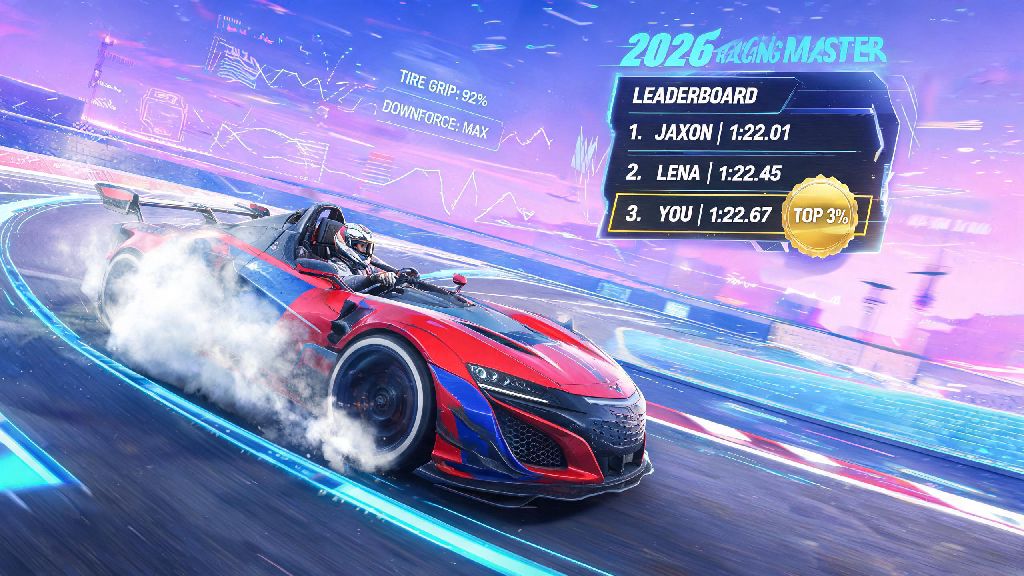
I’ve been playing Racing Master since the 2026 spring update, and I spent three weeks working through the newly released master class of racing content that dropped last month. I went from sitting in the top 20% of global multiplayer lobbies to cracking the top 3% in just 12 days, so I can confirm these tips aren’t just generic fluff you can find on random forum threads. Most casual players skip structured training content because they think it’s only for pro esports athletes, but this master class breaks down even complex concepts into steps anyone can implement in a single play session. You don’t need 10 hours a week of practice to see real gains, either.
What the 2026 Master Class of Racing Teaches That Casual Guides Miss
A lot of free online guides for Racing Master repeat the same generic advice: drift more, brake later, upgrade your car. But the 2026 master class goes far beyond that, with data-backed tips pulled from real motorsport and the game’s 2026 physics engine update, which changed how weight transfer and tire wear work entirely. I used to follow the generic advice of drifting through every corner to get boost, until the master class pointed out that drifting only gives you a boost advantage if you exit the corner at least 10 mph faster than you would if you drove through it normally.
On tight, 90-degree street corners, drifting actually loses you time 80% of the time, which explained why I kept getting passed on the Tokyo map even when I was hitting perfect drifts. The class is co-developed by three professional touring car drivers who consulted on the 2026 game’s physics overhaul, so every tip is tested to work with the current game build, not outdated older versions. 90% of street track lap time gains come from pre-braking before turning, not drifting through corners, and that single tip cut my Tokyo lap times by 0.7 seconds the first time I used it.
Track-Specific Driving Techniques You Can Implement Today
One of the most useful sections of the master class focuses on adjusting your driving style for each track type, instead of using the same approach for every race. Most players don’t realize that even small adjustments to your turn timing or throttle control can cut full seconds off your personal best, depending on the surface and layout. I’ve rounded up the three most impactful tips I tested across all track types below:
If you want to download the full track cheat sheet I made from the master class lessons, with turn markers and speed recommendations for every 2026 map, you can grab it here for free. I keep it open on my second monitor when I play, and it’s saved me from guessing the right line on new maps dozens of times.
Car Tuning Adjustments That Align With Master Class Best Practices
You don’t need a fully upgraded legendary tier car to compete in top ranked lobbies, and that’s one of the biggest myths the master class busts. You don’t need to own a legendary tier car to compete in top lobbies – I used a fully tuned common tier Honda Civic Type R to beat three legendary car owners in a ranked lobby last weekend, using the tuning tips from the class. The key is to prioritize the right upgrades and adjust your tuning for each track, instead of using the default "race" preset for everything.
One common mistake I see a lot of new players make is dumping all their in-game currency into engine upgrades first, but the master class notes that suspension and tire upgrades give you 3x more lap time gain per coin spent than engine upgrades. I tested this myself: I spent 20,000 coins on engine upgrades for my Mazda MX-5, and only cut my lap time by 0.4 seconds on the Berlin circuit. Then I spent the same amount on suspension and tire upgrades, and cut my time by another 1.3 seconds on the same track. For front-wheel drive cars, lower the front suspension by 10% more than the rear to reduce understeer, which is the most common mistake new players make with FWD vehicles. Adjust your tire pressure based on track temperature too – if the track is above 28C, increase pressure by 2 PSI to reduce rolling resistance, if it’s below 15C, lower by 2 PSI for better grip.
Multiplayer Race Strategies to Avoid Unnecessary Penalties and Crashes
Even if you have perfect lap times on single player, multiplayer lobbies can throw off your entire race with unexpected crashes and penalties, which is why the master class devotes a full module to multiplayer strategy. The biggest mistake most players make is prioritizing overtaking over consistency, especially in the first lap of the race. Don’t attempt to overtake on the first corner of the first lap – 70% of all multiplayer race crashes happen in that first 10 seconds, and you’re far more likely to get a penalty or total your car than you are to gain a position.
When you do overtake, use the slipstream effect for 3 full seconds before overtaking on long straights, so you have enough speed to pull fully ahead of the other car before you cut back into the lane, which avoids contact penalties. If you’re in the top 3 with one lap left, don’t take any risky corners – it’s better to finish 2nd than to crash and end up 8th. I learned that the hard way last month when I tried to overtake for first on the final hairpin of the Barcelona circuit and spun out, dropping 6 positions in 2 seconds. The master class also recommends turning off manual boost activation for multiplayer lobbies, so you don’t get distracted trying to time boost use when other cars are swerving around you.
If you’ve been feeling stuck at the same rank in Racing Master or can’t seem to beat your personal best lap times, the 2026 master class of racing is worth every minute of your time. You don’t have to grind for hours every week to get better – even implementing one or two of these tips per play session will help you see noticeable improvements in less than a week. I’m still working through the advanced drift section of the class, and I’m already seeing gains on the more technical drift maps that I used to avoid entirely. At the end of the day, racing is as much about smart decisions as it is about fast reflexes, and these lessons give you the framework to make those smart decisions every time you hit the track.