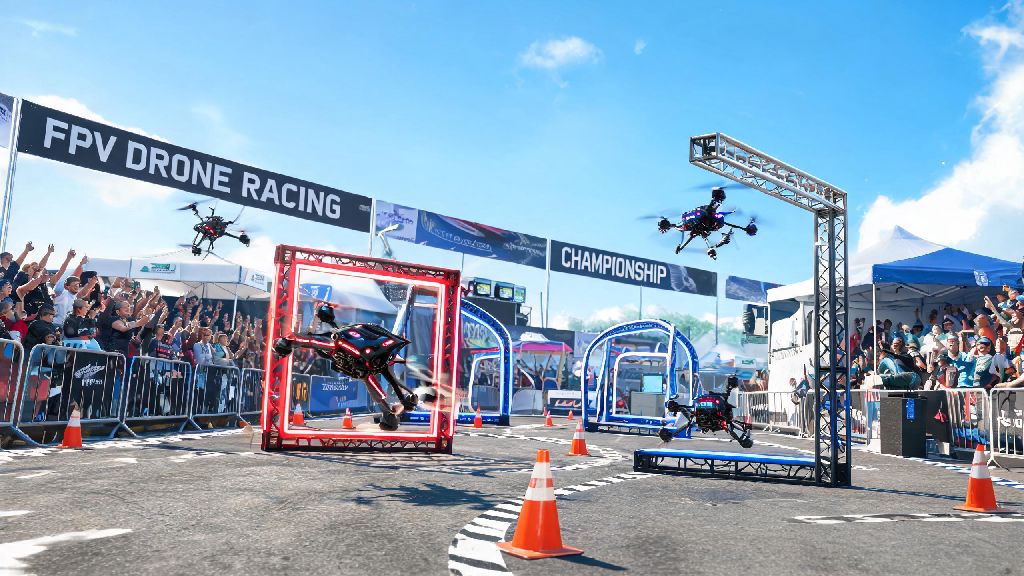
If you’ve spent any time in the competitive FPV scene in 2026, you’ve definitely heard the buzz around drone master racing. What started as a small niche circuit a few years ago has blown up into a global sport with $2.1 million in total prize pools across official international events this year alone. I’ve been competing in these races since the first small regional test events back when the sport launched, and 2026 is by far the most exciting year to join so far. I’ve picked up more than a few hard-earned lessons from crashing 17 drones mid-race and missing podiums by fractions of a second. This guide breaks down exactly what you need to know to climb the ranks, no matter if you’re joining your first local qualifier or gunning for a spot in the 2026 World Finals.
How to Tune Your Drone for Drone Master Racing Tracks in 2026
If you’re used to casual freestyle flying, the settings you use for fun won’t cut it for drone master racing courses, which are designed to test both speed and precision. 2026’s official track layouts have 30% more narrow vertical gaps and tight hairpin turns than last year’s designs, so generic online tuning settings won’t give you the edge you need. Your PID tuning settings are the single biggest factor in how responsive your craft feels on tight courses. I recommend starting with the base PID settings for your specific drone model, then adjusting 2-3 values at a time during test flights to find what feels most natural for your flying style.
Stick to 6S 1300mAh LiPo batteries for 90% of 2026 official tracks. They balance weight and power perfectly, giving you enough juice for 3 full laps without weighing your craft down enough to slow you down through turns. You only need to switch to lighter 4S batteries if you’re competing on a short, sprint-style track under 1km long. For propellers, 51466 tri-blade props are the most popular among pros this year for their extra grip in turns, but if you’re still prone to crashing, stick to cheaper 5140 bi-blades first. They’re far more durable and cost 70% less per set, so you won’t lose hundreds of dollars in parts while you’re learning.
Key Race Day Strategies to Avoid Costly Mistakes
Most new competitors fixate on speed, but the top 10% of drone master racing pros win as much from avoiding mistakes as they do from raw speed. I’ve seen 3 racers in the last 2 months lose first place 10 feet from the finish line because they skipped a basic pre-race check. 62% of all DNFs in 2026 regional qualifiers came from preventable issues, not pilot error mid-race. If you want to make it through every heat and finish in the top 3, stick to this pre-race routine every single time:
The pace of drone master racing heats is fast, so you won’t have time to adjust your settings mid-race, which is why pre-race checks are non-negotiable. Don’t push for full speed on the first lap. Most tracks have hidden obstacles or rough spots you won’t spot during 5-minute practice runs, so take the first lap at 80% speed to map the course properly, then speed up on laps 2 and 3. I used this exact strategy at the Dallas regional in March 2026, moving from 6th place to 2nd over 3 laps because 3 people crashed on the first lap trying to take the lead immediately.
How to Qualify for 2026 Official National and Global Races
You don’t have to be a pro to join official competitive events this year. The barrier to entry is lower than ever, with most local qualifying events open to anyone with a standard racing drone and a valid FPV safety certification. To qualify for regional events, you need 3 top-5 finishes at sanctioned local races, and top 10 finishes at regionals get you a spot in national finals. You don’t need a custom $2000 build to qualify for regional events. 4 of the top 20 finishers at the 2026 Ohio regional used off-the-shelf $500 racing drones, no custom modifications needed.
Most local drone master racing events welcome first-time competitors, so don’t hesitate to sign up even if you don’t think you’re good enough yet. You can find a full list of local sanctioned races near you on the 2026 Drone Master Racing qualifier schedule page, with most small local events only charging a $25 entry fee and offering free practice runs the day before. I started going to 2 pick-up races a week at the start of 2026 when I decided to compete seriously, and cut my crash rate by 40% in 2 months just from racing against other people instead of flying solo. Low-pressure local races are the best place to build your skills without the stress of big prize pools on the line.
Common Misconceptions That Hold New Racers Back
A lot of new drone master racing competitors think they have to keep up with every new gear release to stay competitive, but that’s simply not true. The winner of the 2026 European regional used a drone he built for $380, most of the parts were secondhand from other racers in his local scene. Gear matters, but skill matters far more, especially on 2026’s technical track layouts.
Another common myth is that faster flying always equals better results. You’ll gain more time by taking turns cleanly than you will by flying 5 mph faster down straightaways. I’ve done dozens of flight time comparisons, and even a small mistake like clipping a turn barrier will cost you 2 full seconds, while flying 5 mph slower on a 100m straight only costs you 0.3 seconds. Prioritize control over speed until you can finish 10 full practice runs in a row without hitting any obstacles.
Many new racers also think they need to practice 4 hours a day to get good, but that’s not realistic for most people with jobs or school. 30 minutes of focused practice 3 times a week is far more effective than 4 hours of mindless flying once a week. Focus on one specific skill each practice session, like navigating narrow gaps or taking hairpin turns, instead of just flying around randomly. Record all of your practice and race flights to review later. You’ll spot mistakes you didn’t notice while you were flying, like turning too early or cutting gaps too close, and you’ll fix those issues twice as fast if you review your footage after every session.
At the end of the day, drone master racing is just as much about having fun as it is about winning. I’ve met some of my best friends at races over the last year, and even the days I crash out in the first heat are still worth the time I get to spend with other people who love the sport as much as I do. If you follow the tips we covered here, you’ll be well on your way to climbing the ranks and maybe even taking home a podium spot at a 2026 qualifier before the end of the year. The only thing left to do is charge your batteries and get out to the track.