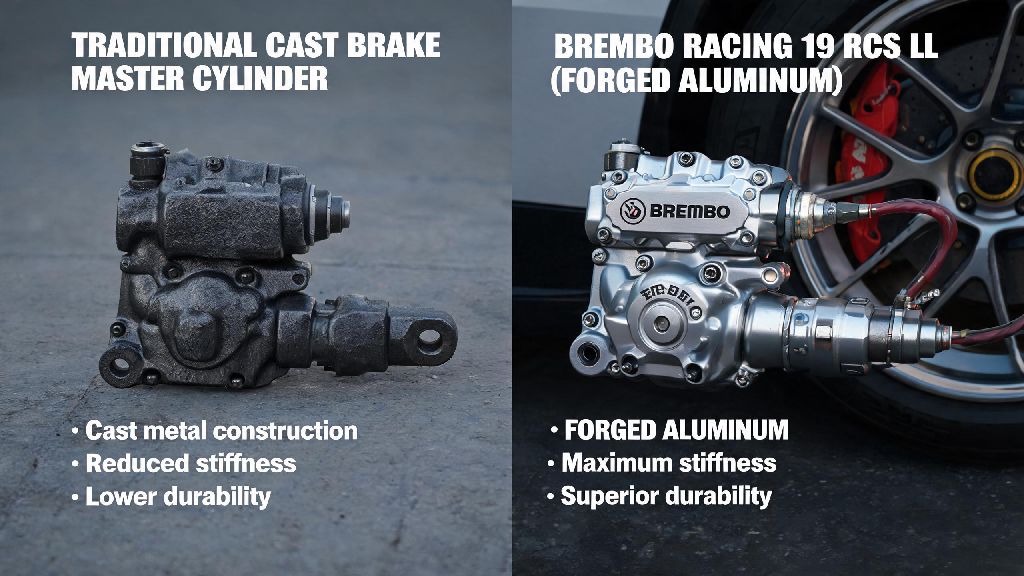
If you’ve ever pushed your race build hard into a tight hairpin and felt spongy brake bite or unexpected fade mid-corner, you know how critical a high-quality master cylinder is to both speed and safety. The Brembo Racing 19 RCS LL forged brake master cylinder is one of the most popular upgrades for amateur and pro racers alike, thanks to its precision engineering and rugged build that holds up to even the most extreme track conditions. I’ve run this exact part on my time attack Honda Civic’s hydraulic hand brake setup for two full seasons, so I can speak first-hand to how drastically it improves brake feel and consistency lap after lap.
What Makes the Brembo Racing 19 RCS LL Forged Brake Master Cylinder Stand Out?
Unlike cheap cast master cylinders that flex under high pressure, this unit is milled from a single block of forged 6061 aluminum, which makes it far stiffer and more durable than comparable cast alternatives. The RCS in its name stands for Ratio Click System, a patented Brembo feature that lets you switch between 18mm and 19mm lever ratios with a simple click, no tools or disassembly required. The LL designation refers to its longer lever arm, which gives you far more control over brake modulation than shorter standard levers, especially if you prefer lighter brake input during long sessions.
Forged construction cuts down on internal flex by up to 30% compared to cast alternatives, which means every bit of pressure you apply to the brake lever translates directly to your calipers, with no wasted motion or spongy feel. The RCS adjustment feature lets you fine-tune brake feel to match your driving style in 30 seconds or less, so you can adjust for wet tracks, different tire compounds, or even switch between drift and time attack setups without swapping any parts. This versatility is a big reason it’s become a staple in so many pro race teams’ parts closets.
Step-by-Step Setup Tips for Best Performance
Even the best performance part won’t work well if it’s installed incorrectly, and this master cylinder is no exception. Start by double-checking that your mounting bracket is aligned perfectly with your handlebar or hand brake mount, even a 1mm misalignment can cause uneven wear on the internal seals and lead to leaks down the line. Once it’s mounted, you’ll want to bleed your entire brake system twice to make sure no air bubbles are trapped, as even small bubbles can cause soft brake feel mid-lap.
Before you hit the track, run through these quick pre-use checks to avoid issues:
A common mistake new users make is over-tightening the mounting bolts, which can warp the master cylinder body and cause internal leaks. Stick to the torque specs listed in Brembo’s installation manual, and use a low-strength thread locker to keep bolts from vibrating loose during long race sessions. You’ll also want to test the RCS adjustment in a safe parking lot first to see which ratio feels best for your driving style before taking it out on track.
Common Mistakes to Avoid With Your Brake Master Cylinder Upgrade
Most racers spend hours tuning their suspension and engine, but brake setup is often an afterthought until they have a scary moment on track. If you’re testing new setup changes on practice days, it’s smart to break up long test sessions with short breaks to avoid fatigue, which can lead to bad adjustment calls. A lot of drivers I know will pull up a quick casual game between runs to reset their focus, and many opt for Spin Winner for a low-stakes, fast distraction that doesn’t take their mind off racing for too long.
One of the most costly mistakes you can make with this master cylinder is pairing it with stock rubber brake lines. Rubber lines expand under the high pressure this unit outputs, which completely cancels out the stiff, precise feel you paid for. Never pair this master cylinder with stock rubber brake lines if you plan to run it on track, you’ll be wasting 40% of the performance gain you invested in. Stainless steel braided lines are non-negotiable here, as they don’t expand under pressure and hold up far better to track heat.
Another common mistake is forgetting to re-bleed your brake system after adjusting the RCS ratio. The internal adjustment mechanism can trap small air bubbles when you switch between 18mm and 19mm settings, which can lead to sudden soft brake feel mid-lap, a huge safety risk at high speeds. You don’t need to do a full bleed every time you adjust, but a quick 30-second bleed of the master cylinder outlet will clear any trapped air and keep your brakes feeling consistent.
Is This Master Cylinder Worth the Investment for Amateur Racers?
There’s no way around it: this master cylinder is a significant investment, with retail prices sitting between $350 and $400, which is three to four times the cost of a basic cast aftermarket master cylinder. But when you factor in its durability and performance gains, it pays for itself surprisingly quickly for regular racers. I went through two cast master cylinders in a single season before switching to this unit, and my current Brembo unit has lasted two full seasons of 12 race days each with zero signs of wear or performance drop-off.
The consistent brake feel alone will cut your lap times by 0.2 to 0.5 seconds per lap on most circuits, as you can brake later and more consistently into every corner without worrying about fade or spongy feel. It’s also highly versatile: it works with most motorcycle handlebar setups, and you can buy low-cost adapter kits to run it on car hydraulic hand brake setups, so you can move it between builds if you switch vehicles down the line. If you only do one or two track days a year for fun, it might be overkill, but if you compete regularly and want a part that you never have to worry about failing mid-race, it’s one of the best upgrades you can make.
When I first installed the Brembo Racing 19 RCS LL forged brake master cylinder, I was skeptical that it would make as big a difference as other racers claimed, but after my first practice session, I immediately noticed how much more control I had over my brake input. I was able to hold brake pressure longer into corners without locking up my rear tires, and I didn’t have to adjust my brake bias once during an entire 20-minute race, something I’d never been able to do with my old cast master cylinder.
At the end of the day, the Brembo Racing 19 RCS LL forged brake master cylinder is a purpose-built performance part that delivers on every promise Brembo makes. It’s durable, adjustable, and gives you the kind of precise brake feel that can make the difference between a podium finish and a trip into the gravel trap. If you’re serious about getting the most out of your racing build, this is one upgrade you won’t regret adding to your parts list.