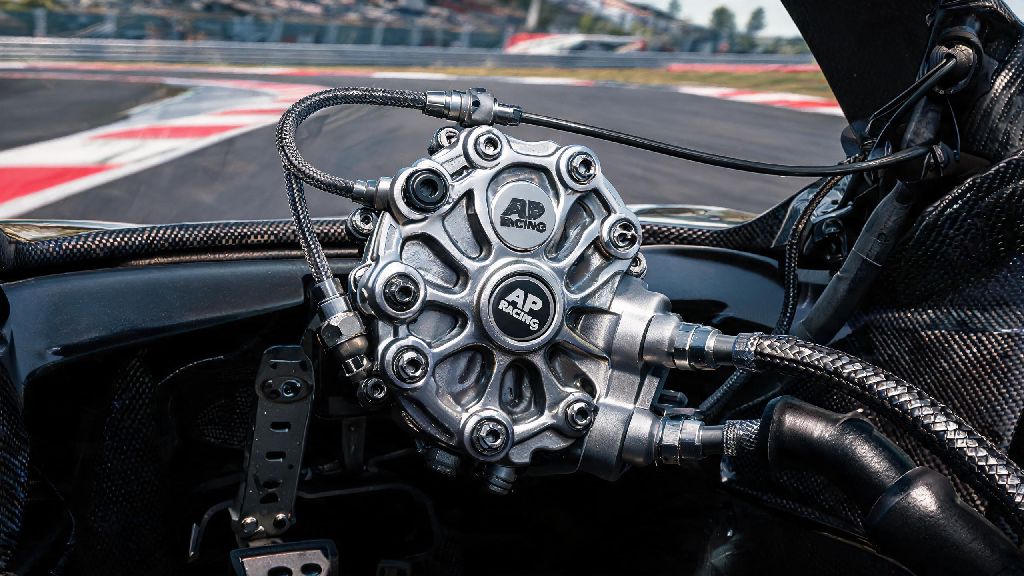
If you’ve spent any time on track or tinkering with your race car’s performance, you know that a responsive, consistent braking system is just as important as horsepower or grip. Too many drivers dump thousands into upgraded calipers and high-temp brake pads, only to leave the most critical part of the system untouched: the master cylinder. I learned this the hard way during a local time attack event two years ago, when my OEM axial master cylinder faded halfway through my final lap, costing me first place in my class. After switching to an AP Racing radial master cylinder, I shaved 0.8 seconds off my personal best at Buttonwillow Raceway the very next event, and haven’t dealt with unpredictable brake feel in the two years since.
What Makes the AP Racing Radial Master Cylinder Stand Out From Standard Units
Most street cars and entry-level race setups use axial master cylinders, where the piston runs parallel to the pushrod coming off the brake pedal. That design is cheap to manufacture and works fine for street use, but it falls apart under the high-stress conditions of competitive racing. Radial master cylinders, by contrast, position the piston perpendicular to the pushrod, eliminating side load that causes uneven seal wear and power loss. Consistent pedal feel is the biggest benefit you’ll notice first; unlike axial units that get spongy as they heat up, radial models maintain the same travel and firmness lap after lap. Reduced internal flex is another key advantage, as AP Racing’s units are machined from solid billet aluminum instead of cast metal, so none of your foot pressure gets wasted twisting weak housing material. You’ll also get lower heat absorption thanks to the aluminum construction and improved internal fluid flow, which cuts down on brake fade during long sessions. I’ve run mine through 12-lap sprint races and 24-hour endurance events, and the pedal feel never changes, even when brake rotor temps hit 1,200 degrees Fahrenheit.
Key Factors to Consider When Picking Your AP Racing Radial Master Cylinder
Picking the right master cylinder isn’t as simple as grabbing the first one you see listed for your car. Get the wrong specs, and you’ll end up with a pedal that’s either so stiff you can’t modulate it, or so spongy you can’t stop fast enough. I’ve helped more than a dozen friends pick and install these units, and these are the non-negotiable factors I always tell them to check first:
One of my friends learned this lesson the hard way when he bought a 1-inch bore unit for his Honda Civic with four-piston front calipers. The pedal was so stiff he could barely press it hard enough to engage ABS, even with a 6:1 pedal ratio. He swapped it for a 15/16-inch bore unit a week later, and it worked perfectly. Bore size matching is the single most important step here, so don’t guess—look up the total piston area for your calipers and use AP Racing’s official sizing chart to pick the right model. You should also double check that your current pedal ratio is between 5:1 and 7:1, as that’s the sweet spot for these radial units. If your pedal ratio is outside that range, you may need to adjust your pedal mount to get the best performance.
Step-by-Step Installation Tips to Avoid Common Mistakes
Installing an AP Racing radial master cylinder isn’t rocket science, but there are a few small mistakes that can lead to big problems on track. Even experienced mechanics cut corners here sometimes, and I’ve seen the consequences firsthand, including a driver who lost brakes halfway down a straight and crashed into a tire wall because he skipped a critical step. First, you have to do a bench bleed before you mount the unit to the car. If you skip this, you’ll trap air in the master cylinder’s internal passages that you can’t get out with standard system bleeding, leading to a soft, spongy pedal no matter how many times you bleed the calipers. When you bench bleed, use the same brake fluid you run in your car, and make sure all air bubbles are completely gone before you move on to mounting. Next, don’t use regular grease to lubricate the seals and pushrod. Use only brake-fluid-safe lubricant that’s approved by AP Racing, as standard grease will eat away at the rubber seals over time and cause leaks. Finally, follow the official torque specifications for both the mounting bolts and the brake line fittings. Over-tightening fittings can crack the aluminum housing, while under-tightening can lead to fluid leaks and brake failure. I always use a torque wrench for every fitting during installation, even if I’ve installed dozens of these units before. It only takes an extra 30 seconds, and it’s not worth risking a crash to save a little time.
Maintenance Practices to Extend Your Master Cylinder’s Lifespan
A well-cared-for AP Racing radial master cylinder can last 5+ years of regular track use, but neglect it and you’ll be replacing it in less than a season. The biggest maintenance mistake most drivers make is skipping regular brake fluid flushes. Brake fluid is hygroscopic, meaning it absorbs moisture from the air over time, which lowers its boiling point and causes corrosion inside the master cylinder’s passages. Regular brake fluid flushes every 3 months for frequent track drivers, or every 6 months for occasional drivers, will prevent this moisture buildup and keep your seals in good shape. You should also inspect the master cylinder’s seals and pushrod for wear every 12 months, or after any event where you had extreme brake heat. If you notice the pedal feel getting softer even after a full system bleed, that’s a sign your seals are starting to wear out, and you should replace them before they fail completely. Don’t wait for fluid leaks to show up, because that means the seals are already badly damaged, and you could lose brakes unexpectedly on track. I also recommend keeping a spare seal kit in your track toolbox, just in case you notice wear during an event weekend. It only takes 30 minutes to replace the seals, and it can save you from wasting an entire event entry fee.
At the end of the day, upgrading your braking system is one of the best investments you can make in your race car’s performance and safety, and the AP Racing radial master cylinder is the foundation of any reliable high-performance brake setup. It doesn’t matter if you’re a casual track day driver or a full-time competitive racer, the consistent pedal feel, reduced fade, and long lifespan you get from these units will pay for itself in faster lap times and fewer repair bills down the line. Just make sure you pick the right size for your setup, install it correctly, and stick to a regular maintenance schedule, and it will serve you reliably for years of on-track fun.