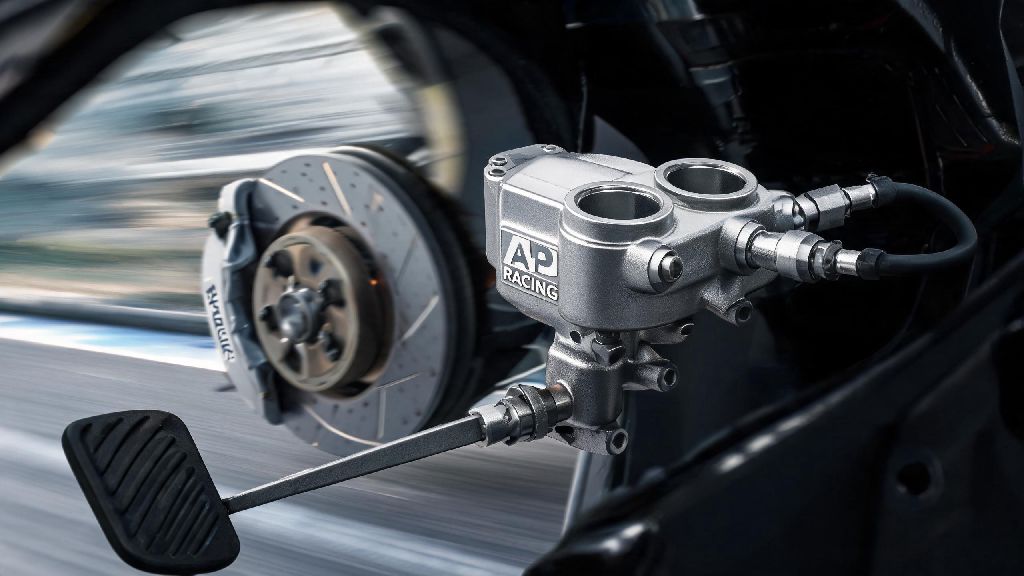
If you’ve ever pushed through a late qualifying lap only to hit the brakes for a hairpin and feel a mushy, unresponsive pedal, you know how frustrating bad brake performance can be. I’ve spent years tuning time attack and endurance race cars, and I’ve tested dozens of brake upgrades to fix exactly that issue. Out of every part I’ve tried, the AP Racing dual bore master cylinder is one of the few upgrades that delivered immediate, measurable improvements in both lap times and driver confidence. Unlike cheap aftermarket master cylinders that wear out after a few track days, this unit is built to hold up to the abuse of competitive racing, with consistent performance that doesn’t fade even after hours of hard driving.
What Makes the AP Racing Dual Bore Master Cylinder Stand Out From Standard Units?
Most stock and entry-level aftermarket master cylinders use a single bore design, meaning one piston pushes the same amount of fluid to both your front and rear brake calipers. That works fine for street driving, but it falls apart on the track, where you need precise control over how much force goes to each set of brakes to avoid lockups or rear brake fade. The dual bore design uses two separate pistons of different sizes, so you can tune pressure to front and rear brakes independently to match your vehicle’s weight balance and grip levels.
AP Racing’s version of this part is built with forged aluminum housing that’s 30% lighter than cast iron alternatives, and it’s treated with a corrosion-resistant coating that stands up to brake fluid, track debris, and extreme temperature swings. I’ve run mine through rain, 100°F summer track days, and even a few off-track excursions into gravel traps, and it still works like new after three full seasons of racing. It does come with a higher upfront cost than off-brand dual bore units, but you won’t have to replace or rebuild it nearly as often, so it saves you money long term if you race more than four times a year.
The biggest difference you’ll notice right away is the consistent pedal feel. Single bore units often get spongy as your brakes heat up, because the single piston can’t adjust for differences in fluid expansion between front and rear calipers. The dual bore design eliminates that issue, so your pedal stays firm and predictable lap after lap, even when your brake rotors are glowing red hot.
How to Size Your AP Racing Dual Bore Master Cylinder for Your Build
Picking the wrong size master cylinder is one of the most common mistakes I see new racers make. A unit that’s too small will require an enormous amount of leg force to stop the car, leaving you with sore legs mid-race, while a unit that’s too large will give you a vague, spongy pedal that makes it hard to apply brake pressure precisely. Getting the size right comes down to matching the master cylinder’s fluid displacement to your existing brake setup and racing needs.
Bore diameter directly impacts pedal feel and required force, so that’s the first spec you’ll want to look at. Smaller bores (15/16” or less) give you a very firm, responsive pedal, but you’ll have to push much harder to get the same stopping power. Larger bores (1” to 1 1/8”) require less leg effort, but you’ll have more pedal travel before the brakes engage. The right size for you depends on a few key factors:
I learned this lesson the hard way when I first bought an AP dual bore unit for my 2300lb Honda Civic time attack build. I picked a 15/16” bore because I wanted the firmest possible pedal, and after 10 lap stints, my right leg was cramping so bad I could barely press the throttle. I swapped to a 1” bore a week later, and it was the perfect sweet spot: firm enough for precise control, but light enough that I could run full 2 hour endurance stints without fatigue.
Key Installation Tips to Avoid Common Performance Issues
Even the highest quality master cylinder won’t perform well if it’s installed incorrectly. I’ve seen entire race weekends ruined because teams skipped simple installation steps that take 10 minutes to complete. Follow these tips to make sure your unit works as intended from the first lap.
Always bench bleed the master cylinder before mounting it. If you install it first and try to bleed the entire system at the calipers, you’ll trap air in the master cylinder that you can’t get out, leading to a spongy pedal that never feels right. To bench bleed, mount the unit in a vice, attach the included bleed nipples, fill the reservoirs with brake fluid, and slowly push the piston in and out with a screwdriver until no more air bubbles come out of the nipples. It takes 5 minutes, and it saves you hours of frustration later.
Next, always use new copper crush washers on the brake line fittings. Old washers get crushed and warped over time, and they’ll start leaking small amounts of brake fluid when exposed to high heat. That leak will get worse the longer you drive, and you could lose all brake pressure mid-lap if you don’t catch it. You can get a pack of 10 copper washers for a few dollars, so there’s no reason to reuse old ones.
Adjust the pushrod length carefully before you button everything up. The pushrod connects your brake pedal to the master cylinder piston, and if it’s too long, it will put preload on the piston, causing your brakes to drag and wear out prematurely. If it’s too short, you’ll have an inch or more of dead travel at the top of the pedal before the brakes engage. Test the full pedal travel at idle before heading to the track – press the pedal firmly 10 times in a row, and make sure it doesn’t sink to the floor or feel soft. If it does, you still have air in the system that needs to be bled out.
Finally, use high quality DOT 4 or DOT 5.1 brake fluid with a dry boiling point of at least 500°F. Cheap brake fluid boils at low temperatures, and the resulting air bubbles will ruin your pedal feel even with the best master cylinder on the market.
Real-World Performance Benefits You’ll Notice On Track
I don’t recommend parts to my fellow racers unless I’ve tested them extensively myself, and the AP dual bore master cylinder is one of the few parts I’ve installed that made a noticeable difference on the first lap. The first time I ran it, I cut half a second off my personal best lap time at my local track, just because I could brake later and more precisely into every corner.
The biggest benefit is consistent performance no matter how hard you push. Last summer, I ran a 2 hour endurance race with a team, and every driver who got in the car commented that the pedal felt exactly the same on lap 80 as it did on lap 1. That’s unheard of with single bore master cylinders, which usually get spongy after 15 or 20 minutes of hard driving. You don’t realize how much mental energy you spend adjusting for changing brake feel until you don’t have to do it anymore, and that extra energy lets you focus on hitting your lines and passing other drivers.
Easier brake bias adjustment is another huge perk, especially if you swap between different track surfaces or weather conditions. With a single bore unit, you have to adjust your bias bar constantly to get the right front-rear balance, and even small changes can throw off your entire setup. With the dual bore design, the pressure to front and rear brakes is already balanced for performance, so you only need to make small adjustments to the bias bar when conditions change. That saves you hours of testing time on practice days, so you can spend more time working on your driving.
It’s not a perfect part for every build, though. If you drive your race car on the street regularly, the firm pedal can get fatiguing in stop and go traffic, so you’re better off sticking with a standard master cylinder for dual-purpose builds. But if your car only sees track time, the benefits far outweigh the minor downsides.
If you’ve spent hours tuning your suspension and engine only to have brake performance hold you back, you don’t have to settle for inconsistent stopping power. The AP Racing dual bore master cylinder is a relatively affordable upgrade that delivers immediate, measurable improvements in both performance and driver confidence, as long as you size it correctly and install it properly. I’ve recommended this part to dozens of racers in my local time attack and endurance series, and every single one has come back saying it was one of the best upgrades they ever made for their car. Take the time to pick the right size for your build, follow the installation tips, and you’ll notice the difference on your very first lap.