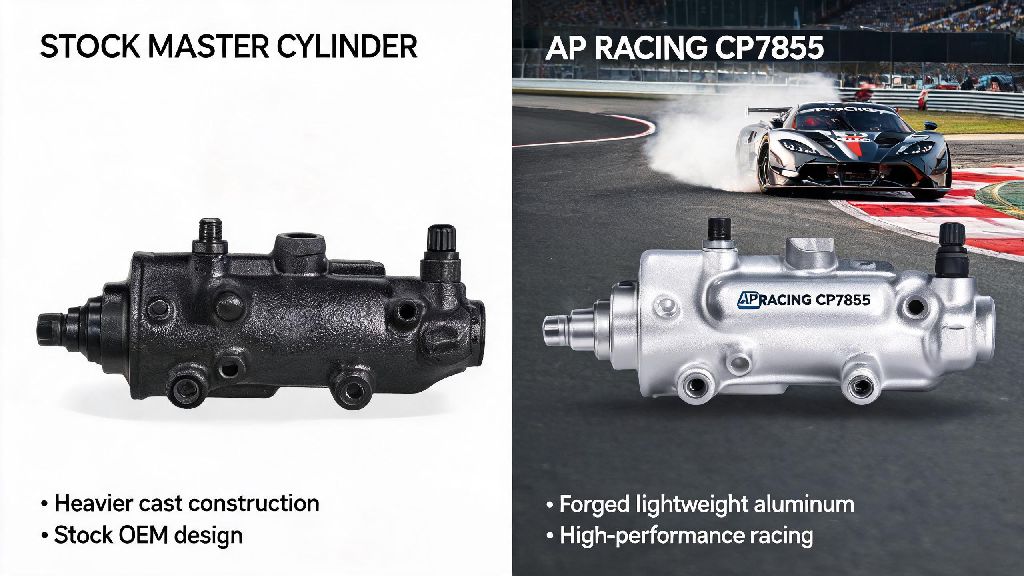
I still remember my third track day, when my stock Honda Civic master cylinder gave out halfway through a qualifying lap. I hit the brakes for turn 2 and the pedal sank straight to the floor, and I had to swerve onto the runoff to avoid slamming into the tire wall. A fellow racer in the pits later told me I should swap my flimsy stock unit for the AP Racing Master Cylinder CP7855, and that single upgrade changed how I approach performance builds forever. Braking is the most underrated performance upgrade you can make, far more important than adding 10 extra horsepower. If you can’t stop fast and consistently, you can’t push your car to its full potential safely, no matter how fast it goes in a straight line.
Key Performance Features of the AP Racing Master Cylinder CP7855
Forged from high-grade aluminum, this master cylinder is built to withstand the extreme heat and pressure of repeated hard braking on track, without warping or leaking. It’s 30% lighter than most cast iron stock and aftermarket master cylinders, so you get a small but noticeable reduction in unsprung weight under the hood, which helps with front-end handling on tight circuits.
The sealed reservoir design is one of its biggest selling points for track regulars. Unlike open reservoir units that can suck in air when you hit 1.5g or more under heavy braking, the sealed system eliminates air ingress entirely, so you don’t get that sudden spongy pedal feel mid-lap that can cause crashes. It’s compatible with DOT 3, DOT 4, and DOT 5.1 brake fluids, so you don’t have to completely flush and replace your existing fluid setup if you’re upgrading from a stock or cheaper aftermarket unit.
It comes in three piston sizes, so you can match it to almost any caliper setup, from basic 4-pot front brakes to full 6-pot front and 4-pot rear big brake kits. The only small downside is that it doesn’t fit some vintage car brake pedal setups without a custom pushrod adapter, so you’ll want to double check fitment for pre-1990 vehicles before ordering. I’ve run this exact master cylinder on three different track builds over the last four years, and I’ve never had a single leak or performance issue, even after 50+ track days of hard driving.
How to Pick the Right Piston Size for Your Build
Picking the wrong piston size is the most common mistake first-time upgraders make when buying this master cylinder. The piston size directly impacts how much pressure is sent to your calipers, how firm your pedal feels, and how easy it is to modulate your braking force for different corner types. A size too small will give you a spongy, long-travel pedal that feels unresponsive, while a size too big will give you a rock hard pedal that’s almost impossible to press lightly, leading to accidental lockups.
Use this simple guide to pick the right size for your setup:
You never want to mismatch piston size to your caliper setup, even if the wrong size is on sale. I made this mistake when I first bought the CP7855, I grabbed the 1 1/16” size because it was $20 cheaper, and I almost locked up my front brakes on my first test drive because I couldn’t press the pedal lightly enough. I had to swap it out for the 15/16” size a week later, and I wasted a full afternoon re-bleeding my entire brake system for no reason.
Step-by-Step Installation Tips for First-Time Users
Installing a master cylinder isn’t as complicated as many people think, but it’s also not a job you want to rush, since a bad installation can lead to total brake failure. If you’re comfortable doing basic car maintenance, you can finish this job in 2-3 hours in your garage, but if you’ve never worked on brake systems before, it’s worth paying a professional to do it for you.
First, always bench bleed the master cylinder before you mount it to your firewall. This process removes all air from the internal chambers of the unit, so you don’t have to spend hours bleeding air out of your entire brake line system later. Most kits come with a bench bleeding kit, but if yours doesn’t, you can pick one up for less than $10 at any auto parts store.
Next, always use new copper washers on the brake line fittings when you connect your lines to the master cylinder. Old copper washers get compressed over time, and they won’t form a tight seal, leading to slow fluid leaks that can cause brake failure down the line. You should also double check that the pushrod length is adjusted correctly to match your brake pedal. Too much play will lead to a soft first press of the pedal, while too little will cause your brakes to drag constantly, wearing out your pads and rotors prematurely.
Test your brake pedal firmness before you take your car off jack stands, let alone on the road or track. Pump the pedal 10 times hard, and if it sinks to the floor at any point, you still have air in your system that you need to bleed out before driving. It’s also a good idea to do a low speed test stop in an empty parking lot first, to make sure your brakes engage evenly and you don’t have any pulling to one side.
Common Issues to Watch for After Installation
Most issues people run into with the CP7855 don’t come from the unit itself, they come from small installation mistakes that are easy to fix if you know what to look for. The most common issue is a spongy pedal, which is almost always caused by air left in the brake lines or incorrect pushrod adjustment. If you bench bleed the unit correctly and bleed all four corners of your brake system twice, the spongy feel will almost always go away.
Another common issue is small fluid leaks around the brake line fittings. If you see drops of brake fluid under your master cylinder after installation, first check that the copper washers are seated correctly and the fittings are tightened to the manufacturer’s recommended torque spec. Don’t over-tighten the fittings, since that can strip the threads on the aluminum master cylinder body, which is an expensive mistake to fix.
You should inspect your master cylinder every 5 track days or 10,000 street miles to make sure the seals are in good shape, there are no leaks, and the mounting bolts are still tight. Even the best performance parts need regular maintenance to work correctly, and small issues caught early can save you from a dangerous situation on track or on the road. I keep a small brake fluid test strip in my glove box, and I test my fluid level and quality every other time I fill up my gas tank, just to be safe.
Upgrading your brake master cylinder is one of the most impactful changes you can make to your performance build, and the AP Racing Master Cylinder CP7855 is easily one of the most reliable, consistent options on the market for both street and track use. It’s not the cheapest master cylinder you can buy, but the peace of mind that comes with knowing your brakes won’t fail mid-lap is worth every extra dollar you spend. If you prioritize safety, consistency, and performance, you won’t regret adding this part to your build list.