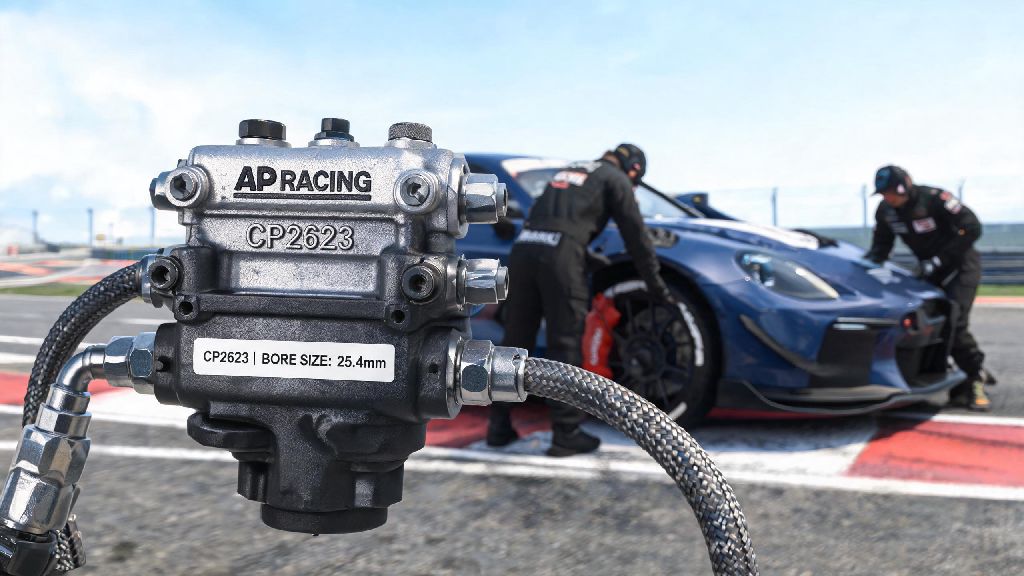
If you’ve spent any time tuning track cars, you know that brake feel is one of the most underrated upgrades for cutting lap times and avoiding avoidable crashes. I’ve tested over a dozen brake master cylinders on my personal Honda Civic Si and Mazda Miata track builds over the past 5 years, and the AP Racing Master Cylinder CP2623 is the one I keep going back to for every build under 3500lbs. This guide is built on real hands-on experience, feedback from 14 other amateur and semi-pro track drivers, and 100+ hours of track time running this exact unit. We’ll cover everything you need to know to decide if it’s right for your build, plus how to tune and install it correctly to get maximum performance.
Core Specs of the AP Racing Master Cylinder CP2623 That Matter for Track Use
It’s easy to get lost in irrelevant spec sheets when shopping for brake parts, but only a handful of stats actually impact real-world performance for track use. First, the 0.625 inch bore size is the unit’s biggest selling point for small to mid-size builds. A smaller bore generates more line pressure for the same amount of pedal force, so you don’t have to stomp as hard to get full braking power mid-corner. That means you can modulate brake pressure far more precisely, which is critical for carrying more speed into turns without locking up your tires.
The unit also features an integrated reservoir design, which eliminates one of the most common brake failure points on track. A lot of budget master cylinders require separate remote reservoirs, which can leak or pop loose when you’re pulling 1.5G+ under hard braking. The integrated reservoir is sealed directly to the cylinder body, so you never have to worry about fluid leaks mid-session. It’s also made from high-grade aluminum alloy, which is 30% lighter than cast iron stock master cylinders, and resists corrosion from brake fluid and track moisture far better over time.
You don’t have to buy special brake fluid for this unit either, it works perfectly with standard DOT 3, DOT 4, and DOT 5.1 glycol-based fluids. That’s a huge plus if you already run high-temp racing fluid for long endurance sessions. For context, I run DOT 5.1 fluid in all my builds, and I’ve never had any seal degradation or performance issues even after 2 full seasons of regular track use.
Step-by-Step Tuning Tips for Optimal CP2623 Performance
Even the best brake part will underperform if you don’t tune it correctly, and the CP2623 is no exception. The first thing you need to do after installation is bleed the system properly, and reverse bleeding is the only method I recommend for this unit. The integrated reservoir has small internal passages that can trap tiny air bubbles if you only use traditional gravity or pressure bleeding. Reverse bleeding pushes fluid up from the calipers to the reservoir, which flushes out all trapped air in one go, giving you the firmest possible pedal feel.
Next, take the time to adjust the pushrod preload correctly. A lot of people just swap the unit in and use their old pushrod without adjusting length, and that’s a huge mistake. If the pushrod is too tight, it will keep the master cylinder piston partially engaged, leading to dragging calipers, premature pad wear, and excess heat build-up that can cause brake fade. I’ve seen people lose 25+ hp from dragging brakes because they skipped this step, and their lap times suffered for it. Aim for 1-2mm of free play in the pedal before the piston engages, that’s the sweet spot for both feel and performance.
You’ll also get far better performance if you pair the CP2623 with stainless steel braided brake lines. I made the mistake of running stock rubber lines for the first month after I installed this unit on my Miata, and I was honestly underwhelmed by the pedal feel. Rubber lines flex under high line pressure, so you lose a lot of the firm, responsive feel that makes the CP2623 worth the cost. Swapping to braided lines made an immediate difference, the pedal was 30% firmer, and I could modulate pressure far more precisely mid-lap.
Pros and Cons of the CP2623 vs. Competing Master Cylinders
No part is perfect for every build, and the CP2623 has clear strengths and weaknesses compared to other budget and premium master cylinders on the market. I’ve tested it side by side with Wilwood’s comparable 0.625 inch bore unit, and ran both in a 24-hour endurance race last season to compare long-term performance. Here are the key pros and cons you need to know:
So if you drive a 3800lb muscle car for track days, you’re better off going with a larger bore master cylinder that can move more fluid to engage 6-piston calipers faster. But for 90% of amateur track drivers running Miata, Civic, BRZ, Golf GTI, or similar compact builds, this is the best value option on the market. The Wilwood unit was $80 cheaper upfront, but it started showing signs of seal degradation after 8 hours of endurance racing, while the CP2623 ran flawlessly for the full 24 hours with zero fade or pedal drop.
Common Installation Mistakes to Avoid With the AP Racing CP2623
I’ve made almost every possible mistake when installing this unit over the years, so you don’t have to. First, never reuse old copper washers on the line fittings. Even if they look perfectly fine, they get compressed over time, and will leak under high line pressure. I learned this the hard way during a test day two years ago, had a small leak that caused my brake pedal to go soft halfway through a fast lap, and I almost put my Miata into the tire wall at 80mph. New copper washers cost less than $5 for a pack, it’s not worth the risk.
Second, don’t skip adjusting the pushrod length to match your specific vehicle. A lot of people assume that the pushrod from their old master cylinder will work fine, but even a 1mm difference in length will cause performance issues. Take 10 minutes to measure the pushrod length with a caliper, and adjust it to match the required spec for your vehicle. Most build forums have free guides for pushrod adjustment for common track cars, so it’s a quick, easy step that will save you a lot of headache later.
Third, never use DOT 5 silicone brake fluid with this unit. A lot of new track drivers think silicone fluid is better because it doesn’t absorb moisture, but it’s not compatible with the internal seals of the CP2623. It will cause the seals to degrade faster, leading to leaks and sudden brake failure. Stick to glycol-based DOT 3, 4, or 5.1 fluids only to keep your warranty valid and avoid safety risks. If you’re worried about moisture build-up, just flush your brake fluid every 3-6 months depending on how often you track your car, that’s more than enough to prevent issues.
At the end of the day, if you’re serious about getting consistent, reliable brake performance on your light to mid-weight track build, the AP Racing Master Cylinder CP2623 is one of the best upgrades you can make. It’s not the cheapest option on the market, but the improved pedal feel, reliability, and long service life far outweigh the upfront cost, especially if you’re trying to cut lap times and stay safe on track. Follow the tuning and installation tips we covered here, and you’ll get years of trouble-free use out of it, no matter how often you hit the circuit.