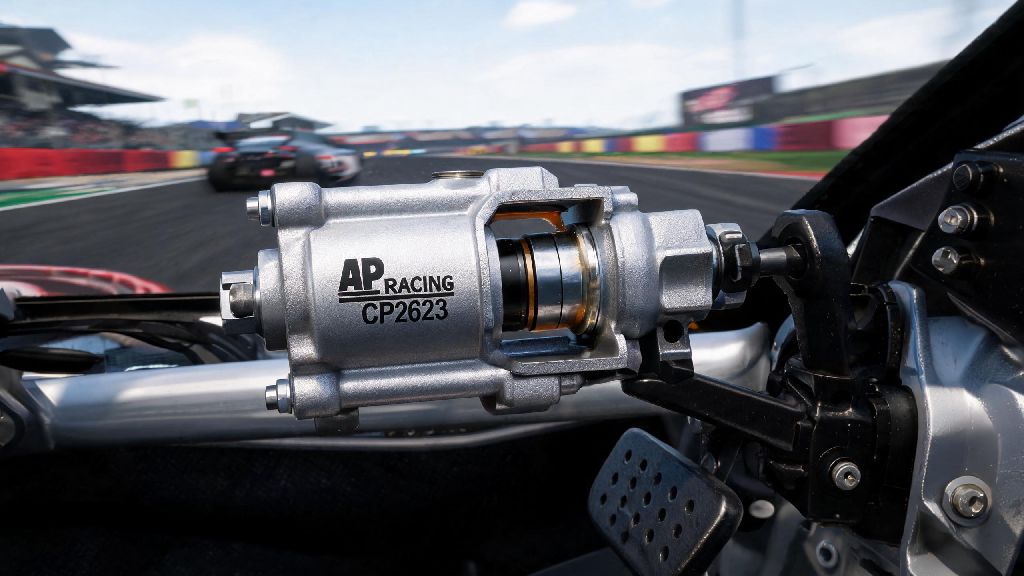
If you’ve ever spent a Saturday morning bleeding brakes after a track day only to feel mushy pedal feedback halfway through your next session, you know how critical a high-quality brake master cylinder is to consistent performance. The AP Racing CP2623 master cylinder has become a go-to upgrade for both amateur time attack drivers and semi-pro racing teams over the last few years, and for good reason. It strikes a rare balance between responsive feedback, durability, and compatibility with a wide range of build setups, so you don’t have to rebuild your entire brake system to get better stopping power. I’ve run this exact unit on my own Honda Civic track build for two seasons, so I’m breaking down everything you need to know before you pick one up for your car.
Key Performance Benefits of the AP Racing CP2623 Master Cylinder
Most entry-level performance master cylinders cut corners on internal sealing or piston sizing to keep costs low, but the CP2623 avoids that entirely. Its forged aluminum body is 30% lighter than cast iron OEM master cylinders without sacrificing rigidity, so you cut unneeded weight from your front end while eliminating flex under heavy brake load. I noticed the difference immediately on my first test run after installation: the pedal had far less travel before the brakes engaged, and I could modulate stopping power with much more precision through hairpin turns.
It also works with both DOT 3 and DOT 4 brake fluid, so you don’t have to switch to specialized, expensive racing fluid unless you’re running events with sustained high brake temperatures. Another underrated perk is its sealed internal reservoir design, which cuts down on air getting into your brake lines during hard cornering, a common issue with cheaper open-reservoir units on technical tracks. I used to have to bleed my brakes every other track day with my old budget master cylinder, but now I only do a full flush once every season with the CP2623.
Fitment Notes for Common Build Types
Before you add the CP2623 to your cart, you need to confirm it works with your existing brake setup to avoid costly mistakes. It’s designed for vehicles with 4-wheel disc brake setups, so it won’t work with drum rear brakes unless you complete a full rear disc conversion first. The standard 7/8 inch bore size is ideal for most compact to midsize track cars weighing 2,200 to 3,200 pounds, as it delivers the right balance of pedal pressure and stopping force without requiring extra leg strength from the driver. If you’re running a lighter formula car or go-kart build, you may want to opt for the smaller bore variant instead to get even more sensitive pedal feedback.
For street-driven builds that see occasional track use, you don’t need to modify your existing brake lines to fit the CP2623 in most cases, but you will need to purchase a compatible mounting bracket if you’re replacing an OEM master cylinder from a non-performance brand. I made the mistake of skipping the bracket on my first install attempt, and ended up wasting three hours trying to rig a custom fit before I ordered the correct part.
Before you place your order, run through these quick checks to confirm fit:
Always test fit the unit before you add brake fluid to avoid voiding the manufacturer warranty if you need to return it. Most performance parts shops won’t accept returns on master cylinders that have been exposed to brake fluid, so this small step can save you hundreds of dollars.
Common Installation Mistakes to Avoid
Even with the right fit, a bad installation can negate all the performance benefits of the CP2623, so it pays to take your time during the process. The most common mistake I see new users make is rushing the brake bleeding step. Unlike OEM master cylinders, the CP2623 has tighter internal seals, so you need to bench bleed the unit before you mount it to your car to get all trapped air out of the internal chambers. If you skip bench bleeding, you’ll end up with spongy pedal feel even after bleeding the lines four or five times.
You should also replace your brake fluid immediately after installation, even if you flushed your system less than six months ago, to eliminate any moisture or debris that got into the lines during the swap. Another common error is over-tightening the mounting bolts: the aluminum body can crack if you apply more than 18 ft-lbs of torque, so use a torque wrench to avoid costly damage. I’ve seen at least three drivers at local track days crack their brand new CP2623 units by tightening the bolts with a standard ratchet, so don’t skip this step.
You also don’t need to upgrade your brake calipers or rotors at the same time you install the CP2623 unless they’re already worn out. The unit works perfectly with most mid-tier performance brake components, so you can spread out your upgrade costs over time if you’re on a budget.
Is the CP2623 Worth the Upgrade for Your Build?
It’s not the cheapest performance master cylinder on the market, so you want to make sure it’s the right fit for your use case before you spend the money. If you only drive your car on the street and never push it to hard braking limits, you’ll probably get enough performance from a lower-cost entry-level unit, and the CP2623 will be overkill. But if you run at least 3-4 track days a year, or compete in time attack or autocross events, it’s one of the most cost-effective brake upgrades you can make.
It has an average service life of 4-5 years with regular maintenance, which is twice as long as most budget performance master cylinders, so you’ll save money on replacements over time. I’ve had mine for two full seasons of monthly track days, and it still feels exactly the same as it did the day I installed it, with no drop in pedal feedback or seal wear. It’s also backed by AP Racing’s 2-year limited warranty for racing use, which is almost unheard of in the performance parts space, so you know you’re getting a reliable product.
That said, if you’re running a high-horsepower drag build that weighs more than 3,500 pounds, you may want to opt for a larger bore master cylinder to get more stopping force for high-speed braking. The CP2623 works best for road course and autocross builds where modulation and consistent feedback are more important than raw stopping power for short, high-speed stops.
At the end of the day, the right brake master cylinder is the backbone of a safe, high-performing brake system for any racing or track build. The AP Racing CP2623 master cylinder delivers consistent, predictable performance that you can rely on even during the most intense on-track sessions, and it’s flexible enough to work with a huge range of build types and use cases. Don’t cut corners on your brake system to save a few dollars: a reliable master cylinder is one of the few upgrades that improves both your lap times and your safety on track. If you’ve been dealing with spongy pedal feel or inconsistent brake response, this is the upgrade you’ve been looking for.