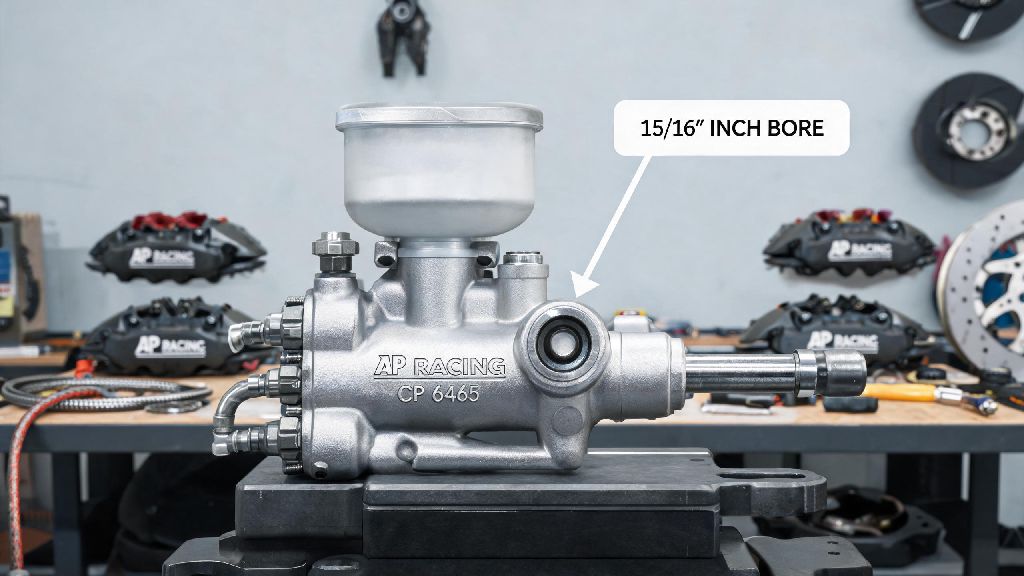
If you’ve ever spent a weekend bleeding brakes on your track build only to feel spongy pedal feedback halfway through your first time attack session, you know how critical a high-quality brake master cylinder is. The AP Racing CP 6465 master cylinder is one of the most sought-after options for both amateur and professional racers, thanks to its consistent performance, durable construction, and compatibility with a wide range of performance brake setups. I’ve installed this exact unit on three of my own track cars over the last four years, from a lightweight Honda Civic hatch to a 400hp Subaru Impreza rally build, so I’ve got first-hand experience with its strengths, quirks, and ideal use cases.
Key Performance Features of the AP Racing CP 6465 Master Cylinder
First off, this unit is built from forged aluminum, which cuts down on weight without sacrificing the rigidity you need for consistent high-pressure brake performance. Its 15/16 inch bore size is perfectly calibrated for 4-piston front and 2-piston rear brake setups, which is the most common configuration for entry to mid-level track and time attack cars. You won't get the overly stiff pedal that comes with oversized master cylinders, and you won't have to press the pedal halfway to the floor to get stopping power either. The AP Racing CP 6465 master cylinder also comes pre-tested from the factory, so you don’t have to worry about receiving a defective unit right out of the box.
Another underrated feature is its integrated residual pressure valve, which keeps a small amount of pressure in the brake lines to eliminate dead travel at the top of the pedal stroke. Unlike cheaper aftermarket master cylinders, it’s fully sealed to prevent dust and track debris from contaminating your brake fluid, which means you won't have to bleed your brakes nearly as often between race weekends. It’s also compatible with both DOT 3 and DOT 4 brake fluid, so you don't have to switch to specialty fluid to use it.
How to Tell If This Master Cylinder Is Right for Your Build
Lots of racers grab this unit just because it’s an AP Racing product, but it’s not a one-size-fits-all solution. You’ll get the best results from it if your build falls into one of these categories:
If you’re running 6-piston front calipers on a heavy V8-powered track car, this unit will be too small, and you’ll want to step up to a larger bore master cylinder instead. You also don’t want to pair it with stock drum rear brakes, because the pressure output won’t line up correctly and you’ll get uneven brake bias that makes stopping safely a lot harder. I made that mistake on my first Civic build, and I had to swap out the rear drums for disc brakes before the pedal felt right.
Installation Tips for Long-Lasting Performance
I’ve installed enough of these to know that cutting corners during installation will lead to headaches down the line, even with a premium part like this. First, always bench bleed the master cylinder before you mount it to your firewall. If you skip this step, you’ll spend hours trying to get air out of the lines later, and you’ll never get a fully firm pedal. The AP Racing CP 6465 master cylinder’s mounting holes are standardized for most compact and mid-size performance cars, but custom builds may need a small adapter plate to line up correctly.
Make sure to use a new master cylinder gasket when you mount it, and tighten the mounting bolts to the manufacturer’s specified torque setting — over-tightening can warp the housing and cause leaks, while under-tightening will let air seep into the system. You’ll also want to adjust your brake bias after installation, even if you didn’t change anything else about your brake system. The CP 6465 has a slightly different pressure output than most stock or cheap aftermarket master cylinders, so you’ll need to tweak your bias valve to get the right balance between front and rear stopping power. If you’re using it for street driving, take 20 to 30 slow stops to bed the master cylinder in before you drive at highway speed, to make sure all the seals are seated correctly and there are no leaks.
Common Issues and How to Fix Them
Even with its top-tier build quality, the CP 6465 isn’t immune to issues, especially if it’s not installed or maintained correctly. The most common complaint I hear is spongy pedal feel a few months after installation. 9 times out of 10, this is caused by not bleeding the system fully during installation, or using old, moisture-contaminated brake fluid. Flush the entire system with fresh DOT 4 fluid and bleed each caliper starting from the farthest from the master cylinder, and you’ll fix that issue right away.
Another less common issue is small leaks around the mounting flange. This almost always happens when people reuse an old gasket, or don’t tighten the bolts evenly. If you spot a leak, don’t ignore it — even a small leak can lead to total brake failure on track. The only other issue I’ve run into personally is fitment on older cars with non-standard firewall mounting points. In most cases, you can buy an adapter plate to make it fit, but you’ll want to check fitment for your specific make and model before you buy, to avoid extra costs and installation delays.
At the end of the day, if you’re looking for a reliable, high-performance brake master cylinder that works for both track and street use, the AP Racing CP 6465 master cylinder is hard to beat. It’s not the cheapest option on the market, but its consistent performance, long lifespan, and wide compatibility make it worth the extra cost for anyone who takes their driving seriously. Just make sure it fits your build’s brake setup, install it correctly, and keep up with regular brake fluid flushes, and it’ll serve you well for hundreds of track hours and thousands of street miles.