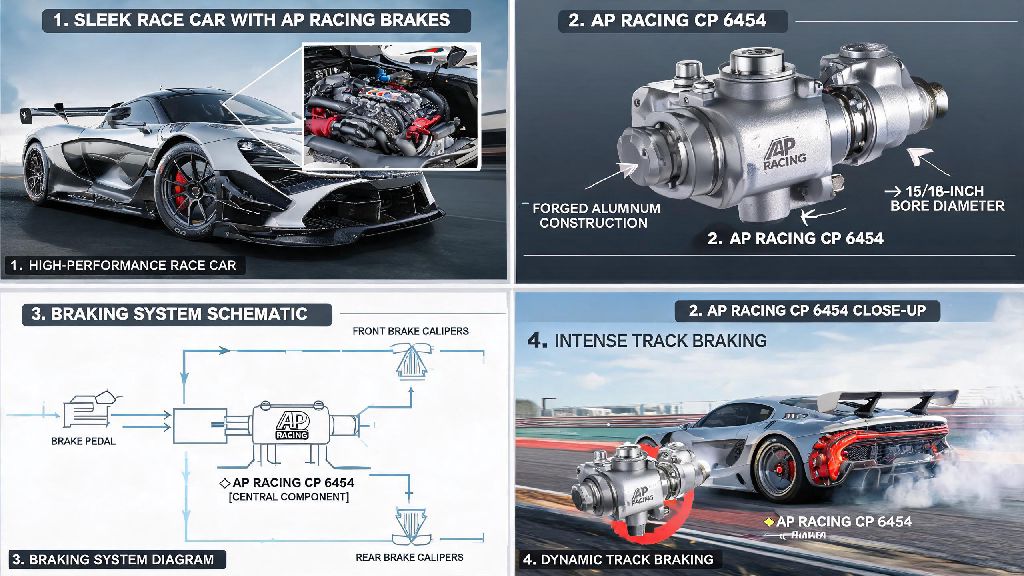
If you’ve spent any time wrenching on track cars or competing in grassroots racing events, you know that inconsistent brake performance is one of the fastest ways to ruin a race weekend. I learned this the hard way a few years back, when a budget master cylinder failed mid-qualifying, leaving me with a spongy pedal and a 10-second slower lap time. After that incident, I swapped to the AP Racing CP 6454 master cylinder, and it completely transformed the reliability and feel of my car’s brake system. This guide breaks down everything you need to know about this popular unit, from installation to tuning to troubleshooting common issues.
Key Performance Benefits of the AP Racing CP 6454 Master Cylinder
Forged from high-grade aluminum and designed specifically for competitive racing use, this 15/16-inch bore master cylinder is built to withstand the extreme heat and pressure of repeated hard braking on track. Unlike stock master cylinders that are designed for daily driving comfort, this unit prioritizes precision and consistency. Consistent pedal feel under heavy braking is its biggest selling point; you won’t experience the random soft spots that plague cheaper alternatives, even after 20+ laps of hard driving. Reduced pedal travel compared to stock or budget alternatives means you can apply brake pressure faster, which shaves valuable fractions of a second off your lap times. Compatibility with most 4-piston and 6-piston front caliper setups makes it a versatile choice for everything from lightweight Miatas to heavier touring cars.
That doesn’t mean it’s perfect for every build, of course. The only downsides of this unit are the higher upfront cost compared to budget master cylinders, and the fact that it does not come with a universal mounting bracket, so you will need to purchase a model-specific bracket for your vehicle if you’re doing a retrofit. For most serious racers, though, these small tradeoffs are well worth the performance gains.
Step-by-Step Installation Best Practices
Installing a brake master cylinder is not a job you want to rush, as even a small mistake can lead to catastrophic brake failure on track. Before you even unbox your new unit, make sure you have all the right tools on hand to get the job done correctly:
Bench bleeding eliminates air pockets that cause spongy pedals, so never skip this step. Clamp the master cylinder to a workbench, fill the reservoirs with brake fluid, and use the included fittings and hoses to cycle fluid through the unit until no air bubbles appear. Once that’s done, you can mount the unit to your car’s firewall, but take extra time to adjust the pushrod length. Too much preload will cause your brakes to drag and overheat, while too little will leave you with excess pedal travel before the brakes engage.
If you don’t have experience working on brake systems, don’t try to install this unit yourself. Even small air leaks can lead to brake failure at high speeds, so it’s always worth paying a professional mechanic who specializes in race car builds to handle the installation if you’re unsure.
Tuning Adjustments for Optimal On-Track Performance
Installing the unit correctly is only half the battle; you’ll need to tune it to match your specific car and driving style to get the most out of it. First, make sure you’re pairing it with the right caliper and rotor setup for your vehicle weight. The 15/16-inch bore of the CP 6454 is ideal for cars weighing between 2,500 and 3,200 pounds with front 6-piston and rear 4-piston calipers. If your car is lighter than 2,200 pounds, you may want to opt for a smaller bore master cylinder to get more pedal feel.
Brake bias adjustment pairing is another key step. You should always pair this master cylinder with an adjustable proportioning valve to fine-tune rear brake pressure. Too much rear brake pressure will cause your rear tires to lock up under heavy braking, while too little will leave you with longer stopping distances. I usually start with a 60/40 front to rear bias for dry track conditions, and adjust up or down by 5% based on how the car feels during practice laps.
You’ll also want to stick to a strict maintenance schedule to keep the unit performing well. For regular track use, flush your entire brake system every 3 to 4 race weekends. Brake fluid absorbs moisture over time, which lowers its boiling point and increases the risk of brake fade mid-race. I learned this lesson the hard way a couple of years ago, when I skipped a fluid flush before an endurance race and experienced minor fade during the final hour of the event.
Troubleshooting Common Issues With the CP 6454
While the CP 6454 is an extremely reliable unit, you may run into small issues from time to time, most of which are caused by incorrect installation or poor maintenance, not a flaw in the unit itself. The most common issue people report is a spongy pedal. In 90% of cases, this is caused by air trapped in the brake lines. Bleed the entire system again, starting from the caliper farthest from the master cylinder, and make sure you’re using fresh, high-quality brake fluid.
If you’re dealing with excess pedal travel, first check your pushrod adjustment to make sure you have the correct amount of preload. If that’s not the issue, inspect all your brake line fittings for small leaks, even tiny drips can introduce air into the system over time. If you notice brake drag when you’re not pressing the pedal, you almost certainly have too much preload on the pushrod, so adjust it back to the recommended 0.1mm clearance as soon as possible.
Genuine vs counterfeit units are another important thing to watch out for. If you see a CP 6454 selling for 50% less than the standard market price, it’s almost certainly a counterfeit. These fake units are made from low-quality materials that can crack or fail under high pressure, leading to total brake loss on track. Always buy from authorized AP Racing dealers to avoid this dangerous risk.
At the end of the day, the AP Racing CP 6454 master cylinder is one of the most reliable upgrades you can make to your track car’s brake system. It delivers consistent, predictable performance that you can count on, even during the most demanding race conditions, and it’s built to last for years of regular track use. It’s not the cheapest option on the market, but the peace of mind and lap time gains it delivers make it well worth the investment for anyone who takes their racing seriously. I’ve run this unit on three different track builds over the past four years, and I haven’t had a single brake-related DNF since I made the switch, which says more about its quality than any spec sheet ever could.