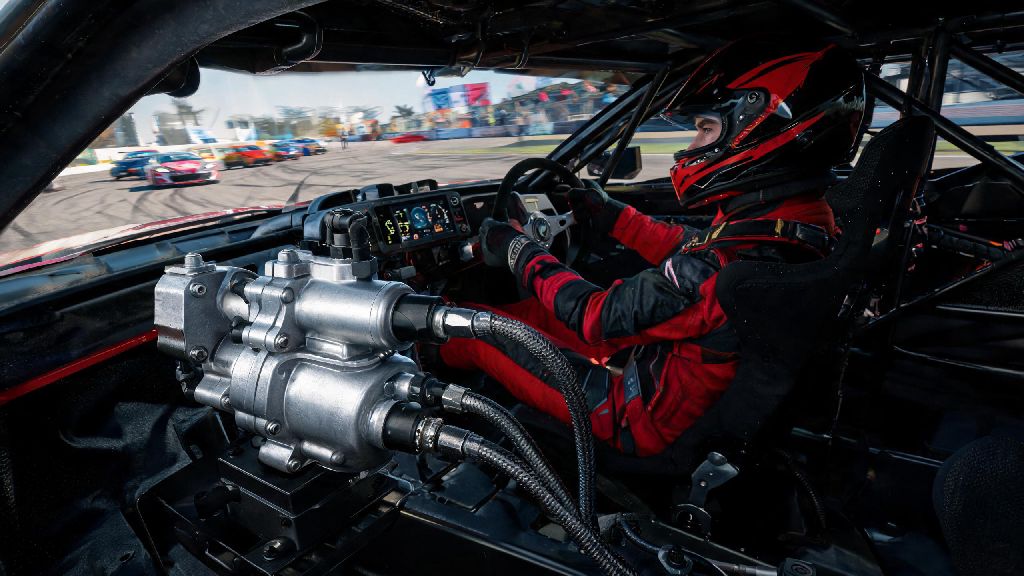
I still remember the local time attack event where a buddy’s Honda Civic blew past the T3 braking marker, skidded across the runoff, and tapped the tire wall. He walked away unhurt, but his car’s front end was totaled. The root cause? A stock brake master cylinder that failed under repeated high-heat track use. That’s the moment I realized how many new racers overlook their brake master cylinder racing setup when modifying their track builds. Most people dump thousands into turbo kits and suspension parts, but skimp on the one component that keeps them out of the wall.
What Makes a Brake Master Cylinder Racing Setup Different From Street Versions?
If you’ve only ever driven street cars, you’re used to a soft, forgiving brake pedal that gets easier to press with vacuum assist. That design works great for commuting, but it’s terrible for racing. Racing master cylinders are built first and foremost for consistent pedal feel, because you need to know exactly how much stopping force you’re getting every time you hit the pedal mid-corner. They don’t use vacuum assist, either, because assist can create inconsistent pressure when you’re bouncing over curbs or pulling high Gs.
Another big difference is heat resistance. Street master cylinders use basic rubber seals that start to break down when brake fluid hits 250°F. On a race track, it’s normal for brake fluid to hit 350°F or higher during a 20-minute session, so racing units use high-temperature seals that won’t leak or degrade even under extreme stress. I learned this the hard way my first year racing: I ran a stock master cylinder for three track days, and by the third day, my pedal had half an inch of extra travel that wasn’t there when the session started. I swapped to a racing unit the next week, and the pedal stayed rock solid for the rest of the season.
Key Factors to Pick the Right Brake Master Cylinder for Your Build
Not all racing master cylinders are created equal, and picking the wrong one can make your brakes feel either mushy or impossible to press. The first thing you need to do is run a bore size calculation to match your master cylinder to your calipers. The general rule of thumb is to aim for a 20:1 to 25:1 ratio of total caliper piston area to master cylinder piston area. Too high of a ratio, and your pedal will be so stiff you can’t press it hard enough to lock the brakes. Too low, and you’ll have to push the pedal three inches before you get any stopping force.
There are a few other core factors to weigh before you make a purchase:
For example, if you upgraded from stock 1-piston front calipers to 4-piston racing calipers, you’ll likely need to step up from a 7/8 inch bore master cylinder to a 15/16 or 1 inch unit. I made this mistake when I first upgraded my Miata’s calipers: I kept the stock 7/8 inch master cylinder, and I had to push the pedal so far down to stop that I almost hit the steering wheel with my knee every time I braked hard. Swapping to a 15/16 inch unit fixed the issue entirely.
Common Tuning Mistakes That Ruin Racing Brake Master Cylinder Performance
Even the best racing master cylinder won’t work right if you tune it wrong. The most common mistake I see is using cheap street brake fluid. Standard DOT 3 fluid has a dry boiling point of around 401°F, but that drops to 284°F as soon as it absorbs any moisture, which it does naturally over time. Racing brake fluid has a much higher brake fluid boiling point, often over 600°F dry, so it won’t turn to gas inside your lines when you’re braking hard lap after lap. If you feel your pedal get spongy mid-session, that’s almost always boiling fluid, not a problem with the master cylinder itself.
Another common mistake is misadjusting the master cylinder pushrod. The pushrod connects your brake pedal to the master cylinder piston, and if it’s too long, it will keep the master cylinder partially engaged even when you’re not pressing the pedal. That will make your brakes drag, overheat your rotors, and wear out your pads in a single session. If it’s too short, you’ll have extra pedal free play at the top of the stroke that wastes valuable stopping time. You want no more than 1/8 inch of free play at the pedal before you feel resistance from the master cylinder.
Finally, don’t skip bleeding the master cylinder itself when you install a new unit. A lot of people bleed the calipers but forget to bleed air out of the master cylinder first, which leaves tiny air bubbles that make the pedal feel spongy no matter how many times you bleed the rest of the system. Most master cylinders come with a bleed kit that lets you bench bleed it before you install it, and it’s worth taking 10 minutes to do this step right.
Simple Maintenance Tips to Extend Your Racing Brake Master Cylinder Lifespan
Racing master cylinders don’t last forever, but you can make them last a lot longer with a few simple maintenance steps. The most important one is regular brake fluid flushes. You should flush your brake fluid completely at least every three track days, or every six months if you don’t race that often. This gets rid of moisture and old fluid that can corrode the inside of the master cylinder and break down the seals.
You should also inspect your master cylinder for leaks before every track day. Pull the cap off the reservoir and check for discolored fluid or debris floating on top. Look under the dash where the master cylinder meets the firewall, too, for any signs of fluid leaking out of the back seal. If you see any leaks, replace the master cylinder immediately, because a failed seal can lead to total brake loss mid-session.
It’s also a good idea to test your pedal feel before every session. Sit in the car, press the brake pedal hard, and hold it for 10 seconds. If the pedal sinks slowly to the floor, that’s a sign that your master cylinder seals are wearing out, and you should replace it before you go on track. Don’t try to drive through this issue, because it will only get worse once the system heats up. I’ve seen people ignore this warning sign and end up in the runoff just a few laps into their first session.
At the end of the day, a properly selected and tuned brake master cylinder racing setup is one of the most cost-effective upgrades you can make to your track car. It doesn’t add horsepower, but it lets you brake later, carry more speed through corners, and avoid costly crashes that can put your car out of commission for months. You don’t have to buy the most expensive unit on the market, but take the time to pick the right size for your build, tune it correctly, and maintain it regularly. That small investment will pay off every time you hit the braking marker at 100+ mph and know your brakes will stop you exactly when you need them to.