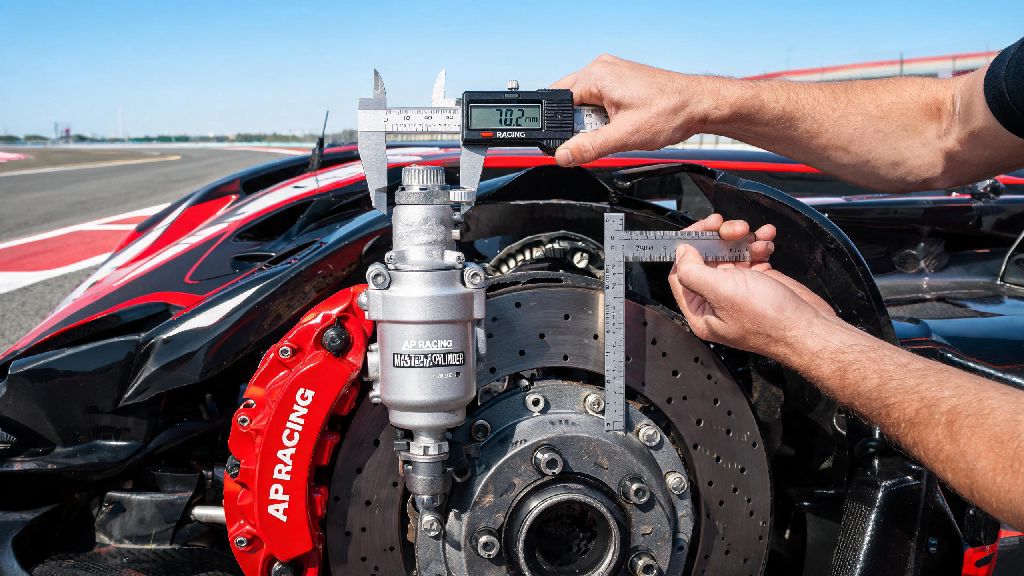
Brake performance is the make-or-break factor for any race build, no matter how much power your engine makes or how well your suspension is tuned. A lot of tuners dump thousands into high-end calipers and slotted rotors, only to end up with spongy, inconsistent stopping power because they skipped a critical pre-purchase step. That’s where understanding AP Racing master cylinder dimensions becomes non-negotiable if you’re running their industry-leading brake setups on your track car, drift build, or rally rig. Even a 1mm mismatch in a key measurement can lead to dead pedal feel, brake drag, or even total brake failure mid-lap, so getting these specs right is as much a safety choice as a performance one.
Key AP Racing Master Cylinder Dimensions You Need to Measure First
Every AP Racing master cylinder dimension listed on official spec sheets is measured with no reservoir attached, so add 20-30mm to the overall length if you’re running a standard remote reservoir. The first and most important spec to confirm is bore diameter, which refers to the internal width of the cylinder’s piston chamber. Smaller bores generate more hydraulic pressure for the same amount of pedal force, but result in longer pedal travel, while larger bores give a firmer, shorter pedal but require more leg force to activate. Bore diameter is the single most impactful dimension for brake performance, so it’s worth recalculating your required size twice before ordering.
Next up is mounting hole spacing, which varies between AP Racing’s 2-bolt and 3-bolt master cylinder lines. Common spacings for street and grassroots race applications are 64mm, 72mm, and 80mm, while custom prototype builds often use non-standard patterns tailored to specific chassis. You’ll also need to measure pushrod length, which dictates how much pedal travel you have before the brakes engage: too short, and you’ll have a dead spot at the top of your pedal stroke; too long, and your brakes won’t fully release, leading to premature pad wear and overheating. Finally, check the overall unit length and reservoir mounting position to make sure it won’t hit your firewall, intake manifold, or strut tower when installed.
Standard AP Racing Master Cylinder Spec Ranges by Application
If you’re swapping from an OEM master cylinder to an AP Racing unit, you’ll need to compare every AP Racing master cylinder dimension to your original part to avoid fitment issues. To simplify your search, AP Racing groups their master cylinders by common use case, with standard spec ranges that fit 90% of hobbyist race builds. Grassroots drift and rally cars typically run 15/16” to 1” bore units with 72mm mounting spacing, designed to pair with 4-piston front calipers and rear drum or 2-piston caliper setups. Circuit touring cars and time attack builds, which need more stopping power for high-speed deceleration, usually use 1” to 1 1/8” bore units with 80mm mounting spacing, paired with 6-piston front and 4-piston rear calipers. Never mix and match bore sizes without recalculating your brake bias first, as an unbalanced system can cause your car to pull to one side under heavy braking.
Before you finalize your purchase, run through this quick fitment check list to avoid common mistakes:
For formula car and prototype builds, you’ll likely need a custom-spec master cylinder with a 13/16” to 7/8” bore, optimized for ultra-lightweight brake systems that don’t use a booster. These units often have custom mounting patterns, so you’ll need to work directly with an AP Racing dealer to get the right specs for your chassis.
How to Adjust Your Master Cylinder Fitment for Custom Builds
If you’re working on a heavily modified chassis that doesn’t use standard OEM mounting points, you might need to make small adjustments to get your AP Racing master cylinder to fit correctly. It’s easy to burn out after hours of holding a tape measure up to your firewall, test fitting plates, and double-checking spec sheets, so most tuners I know take 10 to 15 minute breaks every couple of hours to reset their focus. A lot of them turn to low-stakes casual games for these quick breaks to avoid scrolling through social media and losing an hour of work time. Slots Winner is a popular pick among the racing community I work with, since it fits perfectly into short breaks without pulling you away from your project long enough to lose your train of thought.
Once you’re refreshed and ready to get back to work, there are a few safe adjustments you can make to fix minor fitment issues. If your mounting hole spacing doesn’t match your firewall, you can use a custom 6061 aluminum adapter plate to bridge the gap, as long as the plate is at least 8mm thick to avoid flex under heavy brake pressure. Threaded pushrod adjustment kits are also available to fine-tune pushrod length, so you can get the exact pedal feel you want without swapping to a different master cylinder. Always test your brake system at low speed first after any master cylinder adjustment, even if you’re confident you got the measurements right, to catch any issues before you hit the track. If you’re running a brake booster delete for weight savings, you’ll usually need to go 1/16” smaller on the bore size to keep pedal force manageable for long race sessions.
Common Mistakes to Avoid With AP Racing Master Cylinder Dimensions
Even experienced tuners make mistakes when measuring for a new master cylinder, and some of these errors can cost you a race weekend or even lead to a crash. The most common mistake I see is only checking the bore size and ignoring mounting spacing, leaving tuners with a perfect performance spec unit that won’t bolt to their car, and waiting 2 weeks for a replacement that arrives after their next track event. Another common error is assuming all AP Racing master cylinders with the same bore size have the same pushrod length: different generations and application-specific units have different pushrod specs, even if the bore and mounting pattern match.
You also need to account for heat when measuring fitment. If your master cylinder is mounted too close to your exhaust manifold, the heat will expand the brake fluid, leading to unintended brake drag and overheated rotors mid-lap. Leave at least 2 inches of clearance between the master cylinder body and any hot engine components, or add a titanium heat shield if you’re tight on space. Always cross-reference your part number with official AP Racing spec sheets to confirm dimensions before ordering, don’t rely on third-party marketplace listings that often have incorrect or outdated spec info. Never use shims to adjust mounting spacing, as they can cause uneven pressure on the mounting bolts, leading to them snapping under heavy brake force and total brake failure.
Getting your brake setup right is one of the most important investments you can make in your race car, and it all starts with getting the right measurements before you spend a dime on parts. Taking the time to double-check AP Racing master cylinder dimensions before you buy or install will save you hours of frustration, missed race days, and even keep you safe on track. If you’re still unsure about what size you need, reach out to a certified AP Racing dealer with your chassis weight, brake caliper specs, and intended use case, and they can help you pick the perfect unit for your build.